Engineering a $96.4M Google Shopping engine
A long-horizon Shopping system that returned 10.99× on every advertising dollar.
Overview
This is a Google Shopping + Performance Max case study for a multi-brand ecommerce client, run by Muhammad Naveed over 24 months. The headline result was $96.4M revenue generated. A long-horizon Google Shopping + Performance Max system that generated $96.4M in revenue at 10.99x return on ad spend.
Build a Shopping engine that could absorb 7-figure budgets without ROAS collapsing. Most accounts hit a ceiling at $1–2M spend — this one needed to push to eight figures without losing efficiency.
The numbers, side by side.
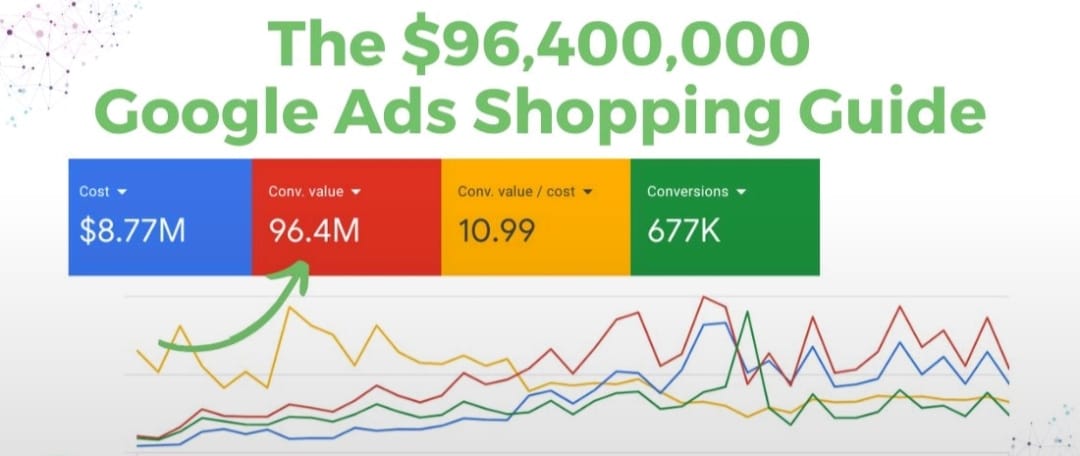
Cumulative spend vs conversion value over the campaign lifetime.
Challenge
Build a Shopping engine that could absorb 7-figure budgets without ROAS collapsing. Most accounts hit a ceiling at $1–2M spend — this one needed to push to eight figures without losing efficiency.
Strategy
- —Feed-first architecture — product titles, attributes and image quality as primary levers
- —Tiered Performance Max stacked on top of Standard Shopping for control
- —Custom labels by margin, velocity, and seasonality
- —Continuous query mining to harvest converters and starve waste
Execution
- —Built a 4-tier Shopping structure across thousands of SKUs
- —Automated feed enrichment with AI-generated titles and attributes
- —Layered branded vs non-branded budgets to protect efficiency
- —Quarterly creative refresh + landing page conversion sprints
The story
“$96.4 million in revenue from $8.77 million in spend didn't come from a single hack. It came from treating the product feed as the most important creative asset in the account. Every title, every attribute, every image was a bid signal. Over two years the system compounded into a 10.99× return — and a playbook I now run for every Shopping client.”
Key takeaways
The feed is the campaign — treat it as creative
Tiered Pmax + Standard gives control without sacrificing reach
Compounding wins beat one-off optimisations