Stabilising performance after Consent Mode
Diagnosing the post-Consent-Mode tracking drop and recovering reported conversions.
Overview
This is a Google Ads · Measurement case study for a eu ecommerce client, run by Muhammad Naveed over 6 weeks. The headline result was 442K conv. value recovered. Diagnosing a post-Consent-Mode tracking drop and recovering $442K in reported conversion value.
After implementing Consent Mode v2, reported conversions dropped sharply and Smart Bidding started mis-pacing. Performance looked broken — but the spend was still real.
The numbers, side by side.
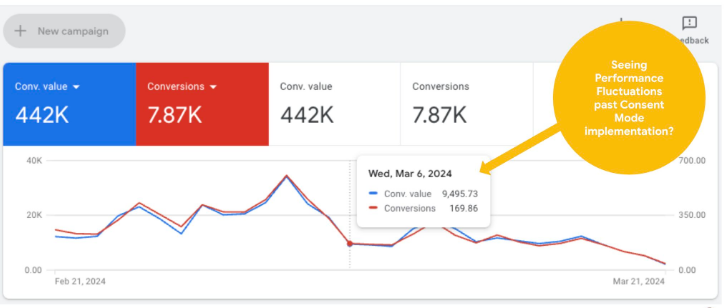
Consent Mode fluctuation — modelled vs observed conversions.
Challenge
After implementing Consent Mode v2, reported conversions dropped sharply and Smart Bidding started mis-pacing. Performance looked broken — but the spend was still real.
Strategy
- —Separate real performance loss from reporting loss
- —Enable Consent Mode advanced + behavioural modelling
- —Re-validate conversion tags and enhanced conversions
- —Rebuild trust in the data with leadership
Execution
- —Full GTM + GA4 + Ads consent audit
- —Server-side tagging for primary conversion events
- —Enhanced Conversions enabled across all campaigns
- —New executive dashboard separating modelled vs observed data
The story
“Half of marketing problems are actually measurement problems in disguise. When Consent Mode hit, this account looked like it was tanking — conversions down, ROAS crashing. But spend was still driving real revenue; we'd just stopped seeing it. Six weeks of tagging, modelling and dashboard rebuilds later, performance was 'recovered' on paper — and Smart Bidding was making good decisions again.”
Key takeaways
Always rule out tracking before rebuilding strategy
Consent Mode modelling > flying blind
Server-side tagging is no longer optional in the EU